Every measurement comes from your photo, so the photo has to show your face as it really is: undistorted, level, evenly lit and relaxed. A selfie at arm's length fails all four. Ten minutes on the setup does more for your accuracy than anything else.
The setup
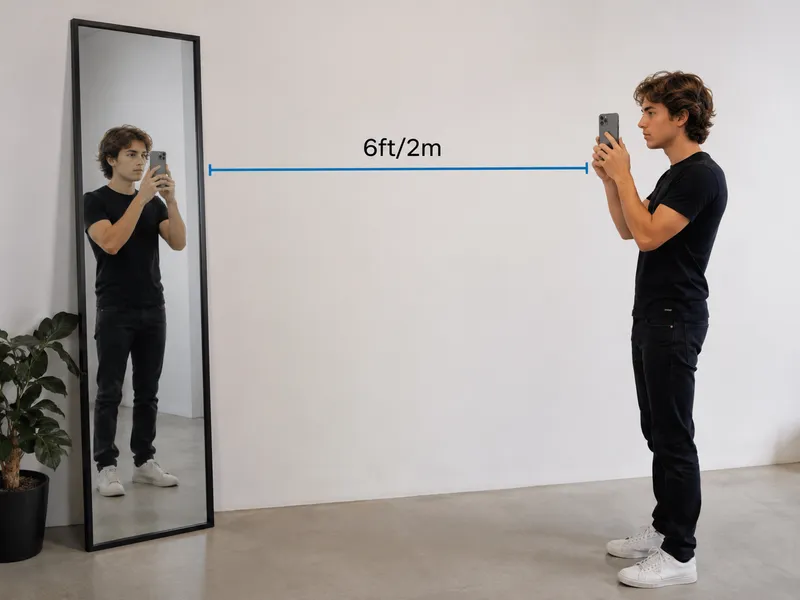
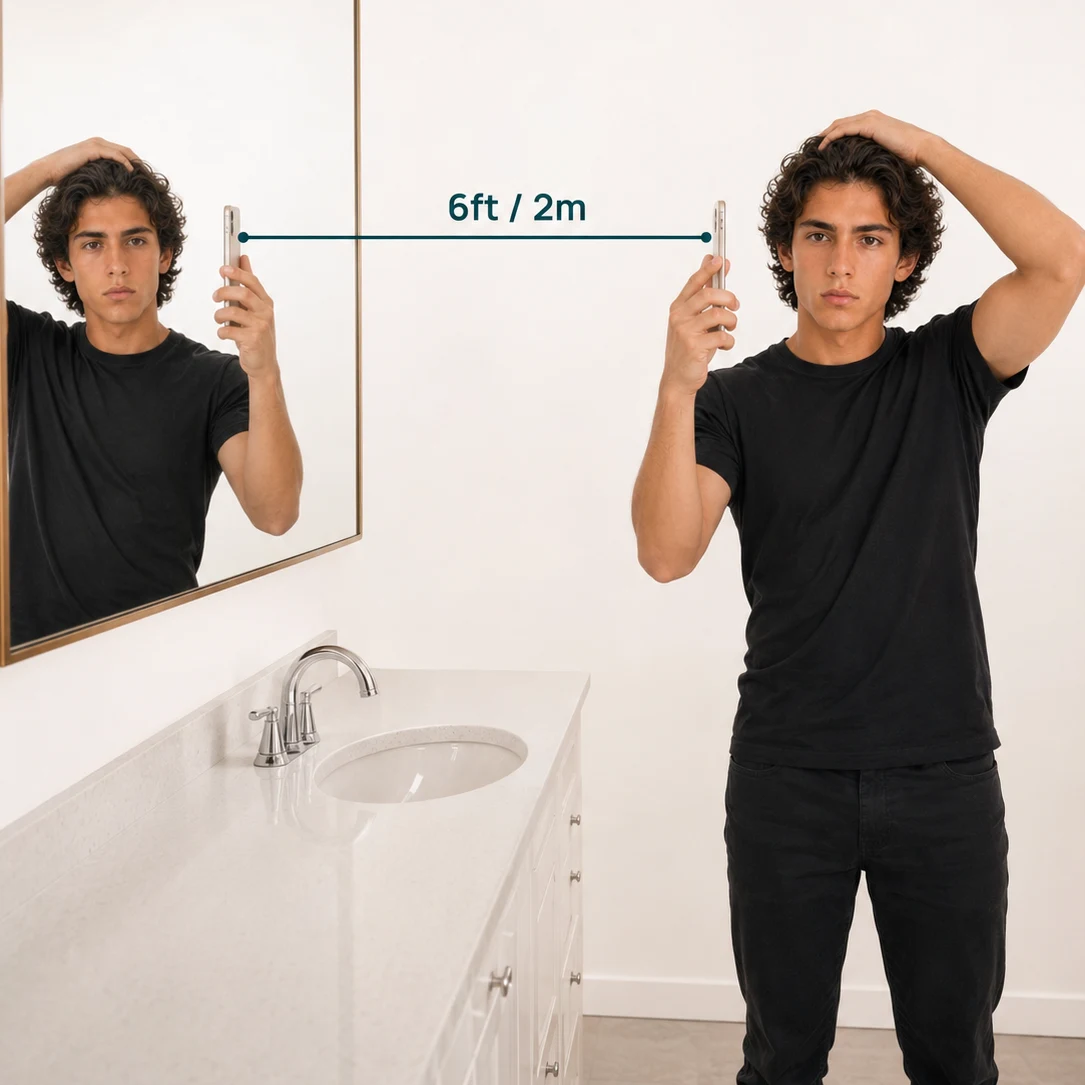
- Stand six feet (about two metres) from the camera. Distance is what removes perspective distortion. Ask someone to take the photo, prop the phone up and use the timer, or stand six feet from a mirror.
- Use the rear camera. It has a better lens and distorts less than the front camera. Zoom in to fill the frame rather than stepping closer.
- Hold the camera at eye level. Shooting from above shrinks the jaw; shooting from below enlarges it. Both change your ratios.
- Use even, soft light from the front. Face a window or a diffuse light. Overhead lights and direct sun cast shadows under the brows, nose and jaw, and those shadows can pull landmarks off the real edge.
- Stand against a plain wall. A busy background makes the side profile outline harder to trace.
Why a selfie gives the wrong score
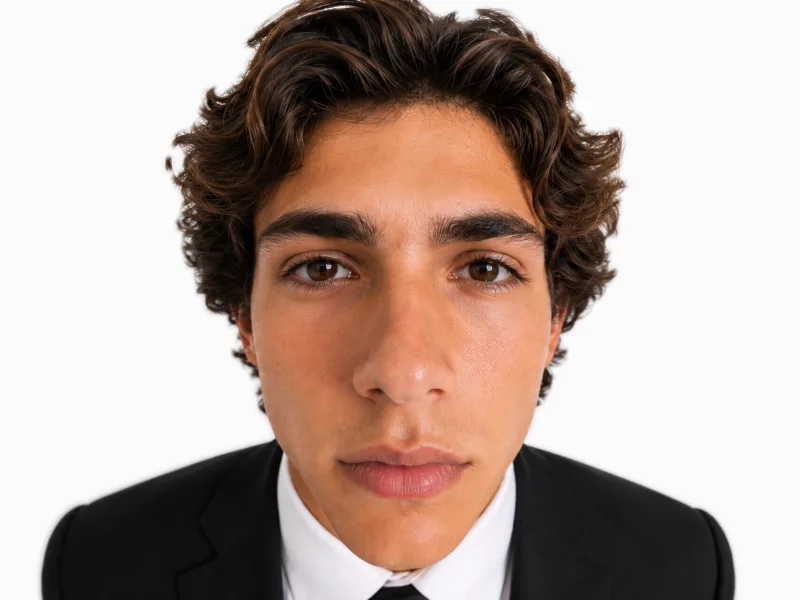
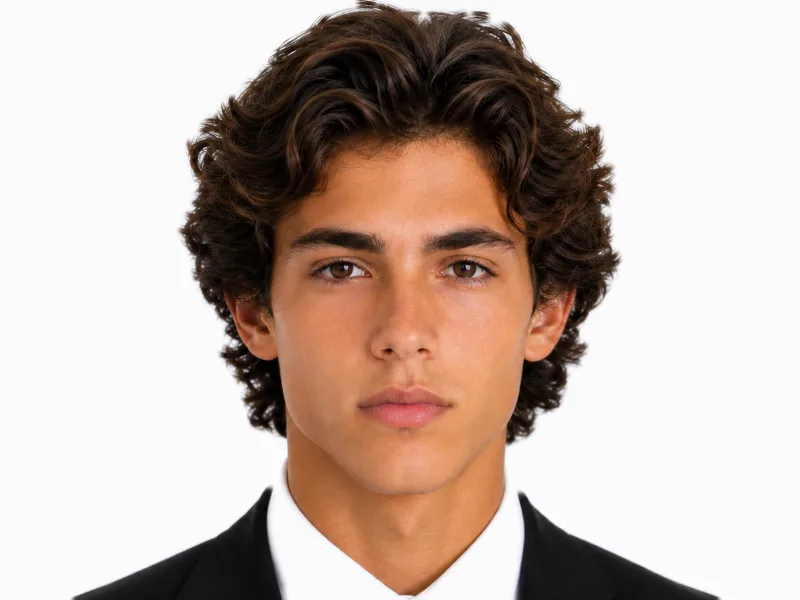
A wide lens close to the face enlarges whatever is nearest to it. The nose grows, the face narrows and the ears disappear. The geometry in the photo is genuinely different from your face, so the ratios calculated from it are genuinely wrong, and moving the landmarks afterwards cannot fix that. It usually lowers your score.
Front photo checklist
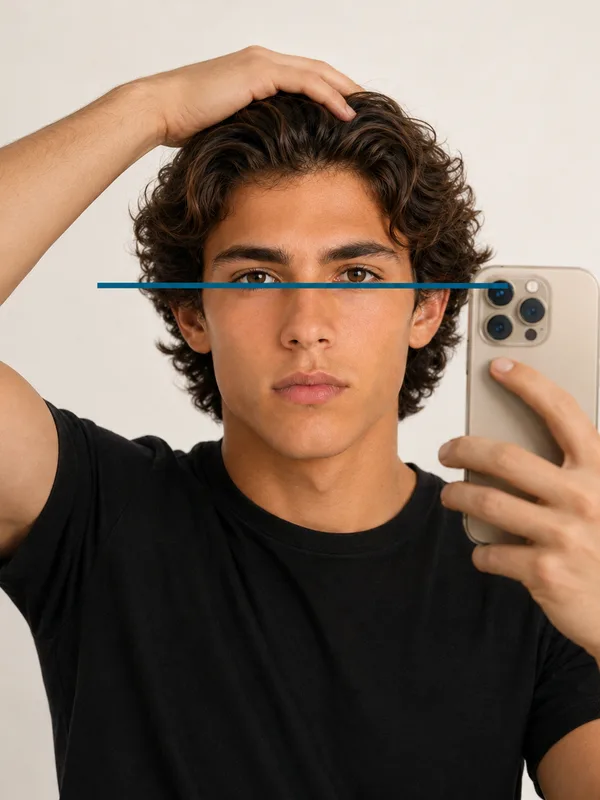
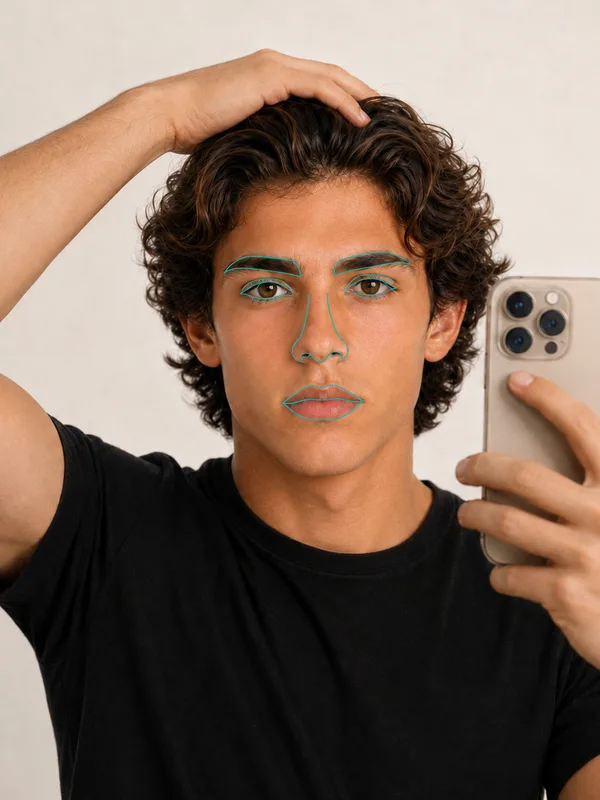
- Look straight into the lens with a neutral expression: no smile, lips closed, jaw relaxed.
- Keep your head level and straight, with no tilt, turn or lean. Your pupils should sit on one horizontal line.
- Pull hair off your forehead and behind your ears. The hairline, both temples, both ears and the whole jaw must be visible.
- Take off glasses. Frames hide the eye corners and brows.
- Turn off filters, beauty modes and portrait blur. They reshape the face or soften the edges the landmarks sit on.
Side photo checklist

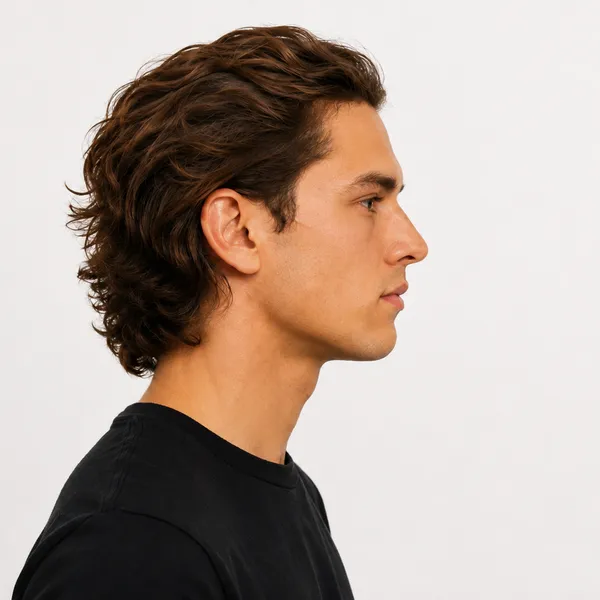
- Turn a full 90 degrees. This matters more than anything else on the side photo. If you can see your far eye, eyebrow or cheek, you have not turned far enough.
- Look straight ahead at eye level, not at the phone. Looking down drops the chin and closes the neck angle.
- Keep the whole profile in frame, from the top of the head to below the chin, with the ear uncovered.
- Keep a neutral expression with lips closed. Do not clench your jaw or push it forward.
- Keep the camera level with your eyes, about six feet away.
Things that quietly change your score
- Smiling shortens the lower face and widens the mouth.
- Raising your chin lengthens the face and sharpens the jaw angle.
- Tilting your head changes eye tilt and symmetry readings.
- Hair over the forehead or ears hides the hairline, temple and ear points.
- A beard hides the real jaw and chin outline, so those points become estimates.
- Hard overhead light fakes cheekbone and jaw definition.
None of these are your face, but all of them are measured.
Consistency for comparing over time
If you want to compare results over time, take every set of photos the same way: same spot, same distance, same light. A change in setup can move a score as much as a real change over several months.
Once your photos are right, landmark placement decides the rest. Continue to Why is my score inaccurate?